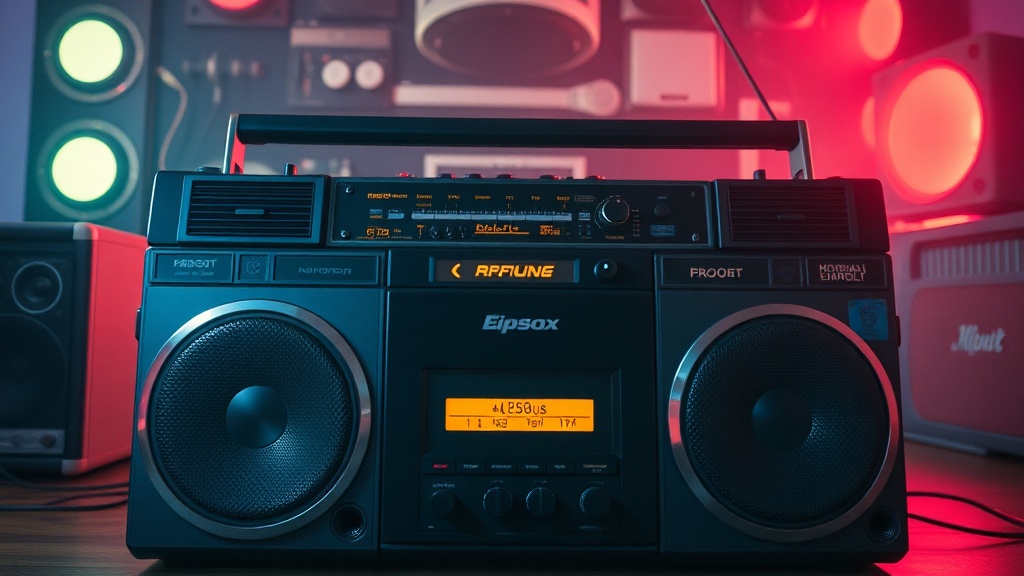
Hidden Gems of the 1980s Boombox Era

The Dual-Cassette Powerhouse
The High-Fidelity Street King
The Compact Radio-Cassette Era
A teenager in 1986 waits by the radio, finger poised over the "Record" and "Play" buttons, hoping to catch a specific track before the DJ talks over the intro. That moment of tension—the gap between the song ending and the voice starting—is what defined an era of physical media. This post explores the overlooked heavyweights of the 1980s boombox era, focusing on high-fidelity portable audio and the cult classics that actually sound good on a street corner.
We aren't just talking about the cheap plastic players that rattle when the bass hits. I'm looking at the machines that collectors actually hunt for today—the ones with real magnetic tape performance and heavy-duty builds. If you want to understand why some vintage players sound thin while others feel like a concert in your hands, you need to look at the engineering behind the boombox boom.
What Makes a Vintage Boombox High Quality?
High-quality vintage boomboxes are defined by their ability to deliver high-fidelity sound through superior speaker drivers and robust motor stability. Most people think a boombox is just a loud speaker, but the real magic happens in the tape deck mechanism. A decent player needs a stable motor speed to prevent "wow and flutter"—that annoying pitch wobble we all hate—and high-quality playback heads that can actually read the high frequencies of a Type II Chrome or Type IV Metal tape.
If you're digging through a thrift store or an estate sale, don't just look at the size. Look at the weight. A heavy machine often implies better internal shielding and more substantial magnets in the speakers. It's a simple rule of thumb, but it works. It's also worth noting that the electronics inside these units can degrade over time if they haven't been maintained. If you find a gem, make sure you clean your cassette player heads with isopropyl alcohol monthly to keep that high-end clarity alive.
The difference between a "toy" and a "collector piece" often comes down to the internal circuitry. Look for brands that specialized in high-fidelity audio rather than just portable radio. The 1980s saw a massive divide between consumer-grade electronics and the high-end gear that enthusiasts crave today.
The Heavy Hitters: A Comparison of 1980s Form Factors
| Category | Typical Use Case | Key Feature | Example Model |
|---|---|---|---|
| Compact Boombox | Casual listening/Portability | Lightweight/Battery focused | Sony ICF-F1 |
| High-Fidelity Boombox | Outdoor social events | Dual Cassette/Stereo separation | Sharp GB-1000 |
| Ghetto Blaster (Elite) | Street performance/Bass-heavy | Massive speakers/Heavy builds | JVC RC-M series |
The distinction is important. A Sony ICF-F1 is a joy to carry around, but it won't compete with a JVC when it comes to pure volume or low-end thump. It's a matter of intent.
Which Brands Are Worth Collecting in the 1980s?
The most collectible brands from the 1980s boombox era include Sony, JVC, Panasonic, and Aiwa, specifically those that prioritized high-fidelity-audio-on-the-go. While many brands released budget-friendly models, the "premium" versions of these products are what drive the collector market today. You want to find the models that featured dual well decks or specialized "Chrome" tape compatibility.
Sony is the obvious giant here. Their engineering was often top-tier, and many of their portable systems remain incredibly reliable. However, JVC was the king of the "street" sound. Their RC-M series units were built for volume and durability—the kind of gear that could survive a day at a park without the internal components shaking loose. If you want to see the history of how these portable devices changed music consumption, you might enjoy reading about the rise and fall of the portable Walkman era.
Aiwa is another name you can't ignore. They were often more aggressive with their features, offering high-end components in smaller packages. If you're looking for a machine that balances size with serious audio fidelity, Aiwa is a safe bet. Just remember: a brand name doesn't guarantee quality—you still have to check the actual playback heads and the condition of the belt system.
The catch? Most of these machines are now 40 years old. The rubber belts inside have likely turned to goo or snapped entirely. You'll need to be prepared for a bit of "surgery" to get them running again.
The Hidden Gems: Three Must-Have Models
- The Sharp GB-1000: This is a powerhouse. It’s a massive unit that delivers a heavy, rhythmic low end that modern Bluetooth speakers just can't replicate. It’s a statement piece.
- The JVC RC-M70: A classic "ghetto blaster" that strikes a perfect balance between size and output. It’s rugged and has that quintessential 80s aesthetic.
- The Panasonic RX-Series: Panasonic models often had incredibly clean, bright highs. If you’re listening to a well-mastered tape, these are the ones that will reveal the nuances.
How Do I Maintain a Vintage Boombox?
Maintaining a vintage boombox requires regular cleaning of the mechanical parts and ensuring the electronics are kept in a temperature-controlled environment. The most frequent issue with these units is "sticky tape" or residue buildup on the playback heads. If the audio sounds muffled or the tape keeps stopping, you likely have a buildup of oxide or debris.
First, never use canned air to clean the delicate parts of a tape deck. The pressure can actually damage the delicate components. Instead, use a dedicated cleaning method. If you find yourself with a playback that sounds "muddy," you should look into cleaning magnetic tape residue safely. It’s a simple process, but doing it wrong can ruin a perfectly good machine.
Second, check your batteries. If you aren't using the boombox regularly, don't leave old alkaline batteries inside. They will leak, and the acid will eat through the circuit board faster than you can say "vintage." This is a common way collectors lose great pieces—simple negligence. If you're serious about this hobby, treat these machines like the precision instruments they are.
Third, watch the belts. The rubber belts in these machines are the first thing to go. If your boombox plays at the wrong speed, the belt is likely stretched or perished. You can find replacement belts easily online, but you'll need a steady hand and a set of precision screwdrivers to perform the swap.
It’s a bit of a learning curve. But once you get that first tape spinning perfectly—clear, loud, and without any pitch wobble—the satisfaction is immense. There's a physical connection to the music that digital files just don't offer. You can feel the weight of the sound. You can feel the era.
Collectors often debate whether to keep these units in pristine, "unopened" condition or to actually use them. I say use them. A boombox that sits on a shelf doing nothing is just a plastic box. A boombox that's playing a high-bias Chrome tape on a sunny afternoon? That's a piece of history in motion.