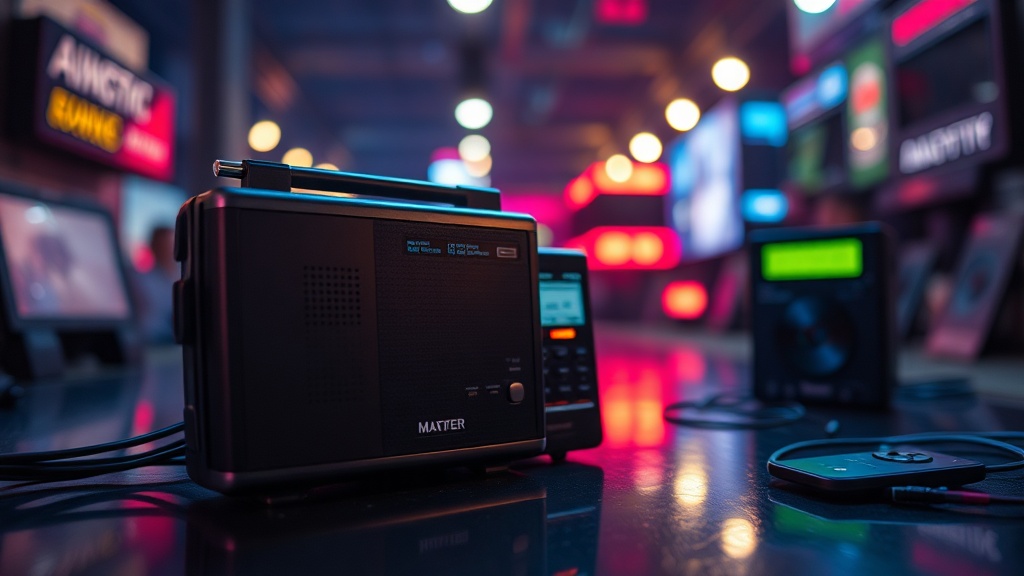
The Rise and Fall of the Portable Walkman Era

A heavy, brushed-aluminum Sony TPS-L2 sits on a desk, its two headphone jacks gleaming under a desk lamp. The mechanical click of the play button is tactile—a heavy, satisfying snap that signals the beginning of a private world. This post examines the meteoric rise of the portable cassette player, the technological shifts that defined the era, and why these devices remain the gold standard for many analog enthusiasts today.
The portable music revolution didn't start with the iPod. It started with the ability to carry a high-fidelity magnetic tape engine in a pocket. This shift changed how we consumed media, moving music from the living room to the streets, the subway, and the bedroom. We're looking at the engineering, the cultural impact, and the eventual decline of the hardware that made it all possible.
What Made the Sony Walkman So Successful?
Sony's success came from a perfect marriage of miniaturization and consumer demand for personal-space autonomy. Before the Walkman, "portable" music meant heavy boomboxes or bulky transistor radios that everyone around you could hear. Sony changed the game by focusing on high-quality stereo headphones and a compact chassis that fit into a standard jacket pocket.
The engineering required to shrink a playback mechanism from a tabletop unit to a handheld device was immense. Engineers had to deal with several technical hurdles:
- Mechanical Stability: Keeping the tape moving at a constant speed without the heavy motors found in stationary decks.
- Battery Efficiency: Ensuring the device could run for hours on a few AA batteries.
- Headroom and Signal: Maintaining decent audio quality despite the small, lightweight components.
It wasn't just about the tech, though. It was about the social implication. For the first time, you could curate your own sonic environment. You weren't just a listener; you were a DJ for your own life. (And yes, the battery life was often a constant source of anxiety, but that was part of the ritual.)
If you're interested in the specific hardware that started it all, you might want to check out my list of iconic vintage cassette players. The history of these machines is often told through the lens of the brands that built them, like Sony, Panasonic, and Aiwa.
How Did Cassette Technology Evolve Over Time?
The technology evolved through a rapid cycle of improving tape density, reducing mechanical friction, and refining the playback heads. We moved from the basic Type I ferric oxide tapes to the high-end Type IV metal tapes that offered much better dynamic range and lower noise floors.
The progression of hardware can be broken down into three distinct phases of development:
- The Early Era (Late 70s - Early 80s): Focus on portability and basic playback. Devices were often bulky and prioritized size over extreme fidelity.
- The Golden Era (Mid 80s - Early 90s): The era of high-end "Hi-Fi" portables. Brands like Nakamichi and Sony produced players with advanced features like auto-reverse and Dolby B/C noise reduction.
- The Miniaturization Era (Mid 90s - Early 2000s): The rise of the "Discman" and specialized ultra-portable players. The focus shifted toward extreme lightness, often at the expense of audio fidelity.
The Walkman history shows a clear trajectory toward making the user more isolated from their environment. As the devices got smaller, the ability to manipulate the tape—fast-forwarding, rewinding, and recording—became more streamlined. This is where the "mixtape" culture truly took root. You didn't just listen; you created. You recorded songs off the radio, timed the pause, and handed a physical piece of your personality to a friend.
The engineering trade-offs were real. A more compact player often meant a smaller motor, which could lead to "wow and flutter"—that slight pitch variation that makes a tape sound "warbly." Collectors today often look for specific models that balance portability with a stable, high-torque motor.
| Feature | Early Walkman Era | High-End Era (Hi-Fi) | Late Digital Transition |
|---|---|---|---|
| Primary Goal | Portability | Sound Fidelity | Miniaturization |
| Tape Type | Type I (Ferric) | Type II (CrO2) / Type IV (Metal) | Basic Type I |
| Main Drawback | Short battery life | Heavy/Bulky | Lower audio quality |
Why Did the Portable Cassette Era End?
The era ended because of the relentless efficiency of digital compression and the sheer convenience of the Compact Disc (CD) and, eventually, the MP3.
While the cassette was wonderful, it was fundamentally a mechanical medium. It required physical contact between a magnetic head and a moving strip of plastic. This contact caused wear—both to the tape and to the machine itself. If you didn't maintain your equipment, the audio quality would degrade rapidly. For example, if you neglected maintenance, you'd quickly find yourself needing to learn about cleaning magnetic tape residue safely just to keep your playback heads functional.
The death knell was the "Skip" factor. A CD could skip, but a digital file didn't skip at all. The portability of the cassette was eventually eclipsed by the portability of the iPod. A digital file doesn't wear out. It doesn't require a motor to spin or a belt to turn. It’s just data.
The transition wasn't overnight. There was a long period where high-end cassette players were still being produced for audiophiles who preferred the warmth of analog. But the mass market moved toward the digital. The convenience of being able to carry 1,000 songs in your pocket without a single moving part was a force that no amount of analog "warmth" could beat.
The sheer weight of the hardware also became a liability. In the early 80s, a high-end player was a statement piece. By the late 90s, it felt like an antique. The world wanted things lighter, faster, and more invisible. The heavy, mechanical soul of the Walkman was simply too much for a world moving toward the lightness of the cloud.
Yet, the enthusiast community remains. We aren't just looking for music; we're looking for the physical connection to the medium. There is a reason people still hunt for original Sony or Panasonic units in thrift stores. It's the tactile-ness. The way the music feels as much as how it sounds. The era might be "over" in terms of market dominance, but in terms of cultural-resonance, it's still very much alive in the hands of collectors.