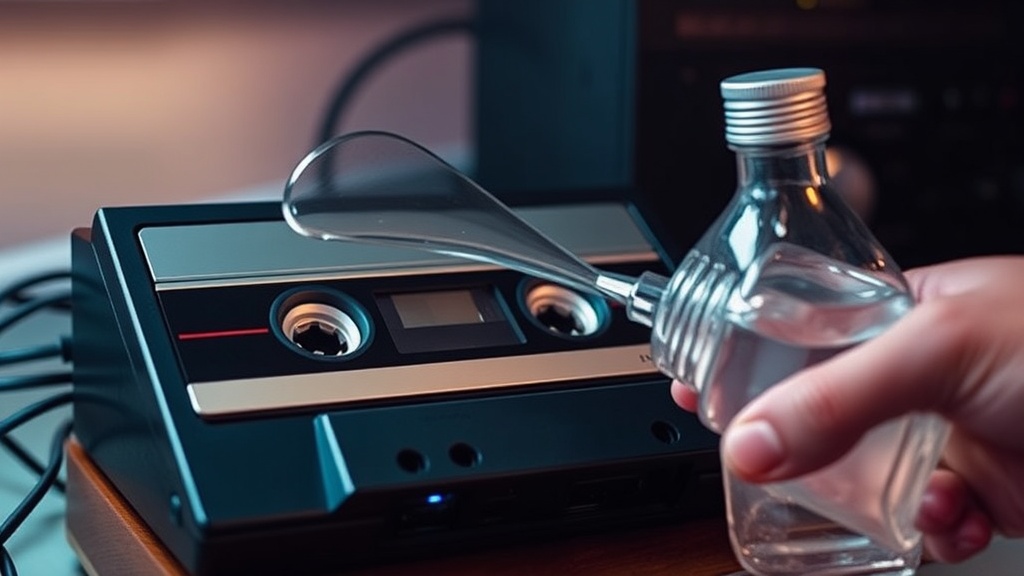
Clean Your Cassette Player Heads with Isopropyl Alcohol Monthly

Quick Tip
Clean your cassette player heads, capstan, and pinch roller with 99% isopropyl alcohol and a cotton swab every month to prevent oxide buildup and maintain optimal sound quality.
Dirty tape heads ruin sound quality and chew through precious cassettes. This guide shows why monthly cleaning with isopropyl alcohol keeps decks sounding crisp—and prevents permanent damage to rare tapes.
Why should you clean cassette player heads monthly?
Monthly cleaning prevents oxide buildup from transferring onto your tapes. That reddish-brown gunk you sometimes see? It's shed from the magnetic coating—and once it cakes onto the heads, it creates a feedback loop of degradation. The heads can't read properly, so the deck compensates by increasing pressure, which causes more shedding. (Not ideal for that original 1984 Purple Rain pressing.)
Regular maintenance also extends the lifespan of your pinch rollers and capstans. Clean heads mean less friction, which means less wear on every moving part. The catch? Most collectors wait until they hear muffled highs or see visible residue—by then, the damage has started.
What percentage isopropyl alcohol should you use?
Use 99% isopropyl alcohol—not the 70% bottle from the pharmacy. Higher concentrations evaporate faster, leaving zero residue. Lower percentages contain water and additives that can corrode delicate head surfaces over time.
Here's what works (and what doesn't):
| Product | Percentage | Good for Heads? | Notes |
|---|---|---|---|
| 99% Isopropyl Alcohol | 99% | Yes | Fast evaporation, no residue |
| 70% Isopropyl Alcohol | 70% | No | Contains 30% water—risk of corrosion |
| Denatured Alcohol | 95%+ | No | Contains additives that damage plastics |
| Contact Cleaner | Varies | Sometimes | Check label—some leave lubricants |
Worth noting: 99% isopropyl is available at most electronics supply stores and online. A 16-ounce bottle from brands like MG Chemicals or Swan costs under $10 and lasts years.
How do you clean cassette player heads properly?
Dampen a cotton swab (Q-tips work fine) with 99% isopropyl alcohol—don't soak it. Gently wipe the heads in a circular motion, rotating the swab as you go. The heads are the small metal cylinders or blocks near where the tape makes contact. You'll see two or three: the erase head, record head, and playback head (on a three-head deck like the Nakamichi BX-300).
Here's the thing: never press hard. The heads are precision-ground to microscopic tolerances. Let the solvent do the work—alcohol breaks down oxide, you don't need elbow grease.
Steps for a thorough monthly clean:
- Power off and unplug the deck—safety first, always
- Press play to open the tape gate, then unplug (keeps heads exposed)
- Dampen swab with 99% isopropyl alcohol
- Wipe each head gently—circular motions, light pressure
- Clean the pinch roller (the rubber wheel)—this grabs tape and needs love too
- Clean the capstan (the metal post the roller presses against)
- Let everything dry 30 seconds—alcohol evaporates fast
- Run a demagnetized head cleaner tape if you have one
Demagnetizing matters—magnetic fields build up on heads over months, causing high-frequency loss. A demagnetizer from Marantz or Tascam runs about $30 used. Run it near each head for a few seconds monthly—never touch the heads with it.
That said, some collectors swear by chamois swabs instead of cotton. They don't leave fibers behind. Teac and Sony both sold branded head cleaning kits back in the day—these typically included chamois-tipped sticks and a small bottle of solution. Vintage kits show up on eBay regularly.
"A clean head is a happy head. The difference in high-end response after a proper cleaning is audible immediately—especially on chrome and metal tapes." — Soren Fernandez, cassetteplayers.blog
Skip the "cleaning cassettes" with abrasive fabric—they're fine for emergencies but the fabric can micro-scratch head surfaces over time. Liquid cleaning with isopropyl is gentler, more thorough, and costs pennies per session. Set a phone reminder. Your tapes—and your ears—will thank you.