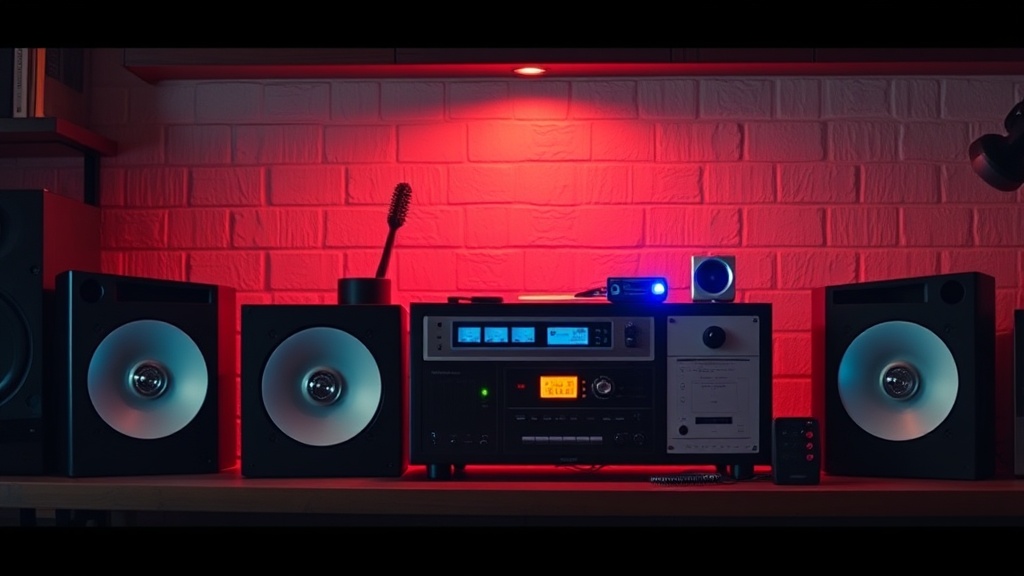
How to Build a Dedicated Cassette Listening Station in Your Home

Here is a surprising statistic: the average cassette tape contains roughly 1,800 feet of magnetic ribbon—and every single inch of it deserves better than a dusty corner shelf and a pair of cheap earbuds. If you have spent years amassing a collection of vintage tapes, rare imports, or home-dubbed mixes, you owe it to yourself to create a space where analog audio can truly sing. A proper listening station is not about ostentatious display or recreating a 1980s bedroom aesthetic (though nostalgia has its place). It is about extracting every decibel of warmth, detail, and character that magnetic tape offers—while protecting your investment from the slow decay of neglect.
Most collectors treat their cassettes like books on a shelf: alphabetized, perhaps, but rarely engaged with in any meaningful way. The tapes sit in plastic cases, stacked in milk crates or shoeboxes, waiting for that mythical "someday" when time permits a proper listen. Meanwhile, the equipment languishes in closets—Walkmans with corroded battery terminals, boomboxes with seized volume pots, component decks buried under piles of sweaters. This is not collecting; this is hoarding with extra steps. A listening station breaks that cycle by creating a ritual space—one that invites you to actually play your tapes, compare pressings, and hear the subtle differences between a 1982 Chrome Dioxide Maxell and a 1987 cobalt-doped variant.
What Equipment Do You Actually Need for a Quality Setup?
The foundation of any listening station is the playback device, and here is where opinions diverge sharply among collectors. Some swear by vintage component decks—the Nakamichi Dragon, the Tascam 122MKII, the Sony TC-K series—machines built in an era when cassette was a serious hi-fi format, not a convenience medium. Others prefer the simplicity and portability of a well-maintained Walkman or portable deck, arguing that the intimate, headphone-focused experience is what cassettes were always meant to deliver. Both approaches are valid, but they require different supporting infrastructure.
If you go the component route, you will need an amplifier or receiver with proper tape monitoring capabilities (look for "Tape 1" and "Tape 2" inputs on the back panel), a decent pair of bookshelf speakers, and quality speaker wire. Do not cheap out on the wire—oxygen-free copper with secure banana plug terminations makes an audible difference, especially with complex orchestral passages or densely layered electronic music. For portable enthusiasts, the requirements are simpler but no less important: a headphone amplifier with low output impedance (to properly drive vintage headphones), a comfortable listening chair with good lumbar support, and task lighting that does not generate heat or UV radiation.
Power conditioning is often overlooked but critically important. Vintage cassette equipment was designed for the cleaner electrical grid of the 1970s and 80s. Modern residential power is noisy—filled with harmonics from LED bulbs, switching power supplies, and Wi-Fi routers. A Furman power conditioner or similar unit will filter out line noise, protect against voltage spikes, and provide clean, stable power to your deck's motor and electronics. Your tapes will thank you with quieter backgrounds and more stable pitch.
Where Should You Position Your Listening Station for Best Results?
Room acoustics matter enormously for cassette playback, perhaps more than digital formats because of tape's inherent noise floor and limited dynamic range. You want a space that is neither too "live" (echoey, with hard parallel surfaces) nor too "dead" (carpeted, curtained, and absorptive to the point of suffocation). A medium-sized bedroom or dedicated office typically works well—avoid large open-concept spaces where sound dissipates into void.
Position your listening chair against the short wall of a rectangular room, facing the long dimension. This minimizes early reflections and bass buildup in corners. If you are using speakers, place them on stands at ear height when seated, forming an equilateral triangle with your listening position. Toe them in slightly—15 to 20 degrees—so they fire directly at your ears rather than straight ahead. This simple adjustment transforms muddy, indistinct playback into detailed, three-dimensional soundstaging.
Avoid placing your cassette deck near heat sources—radiators, direct sunlight, or electronics that run hot. Magnetic tape is sensitive to temperature fluctuations; a deck sitting on top of a tube amplifier will experience accelerated belt deterioration and capstan warping. Similarly, keep your tape storage away from exterior walls where condensation can form during weather changes. A consistent environment—65-72°F with 40-50% relative humidity—is the sweet spot for both equipment longevity and tape preservation. For more detailed guidance on environmental control, IASA's magnetic media preservation guidelines offer comprehensive technical standards used by archives worldwide.
How Do You Organize Your Tapes for Easy Access and Regular Rotation?
A listening station is only useful if you actually use it—which means your tapes need to be visible, accessible, and organized in a way that encourages exploration. Alphabetical sorting is fine for reference, but it is terrible for discovery. Consider alternative organizational schemes: by recording year, by label, by genre, or even by "mood." The goal is to create connections between tapes that spark curiosity—seeing a 1984 Warner Bros. pressing next to a 1984 Columbia House club edition invites comparison. Noticing three different versions of the same album (US, UK, Japanese) prompts you to actually listen for regional mastering differences.
Storage furniture matters. Avoid deep shelves where tapes disappear into darkness; you want shallow, well-lit cubbies where spines are readable at a glance. IKEA's Kallax units work reasonably well, though the depth is excessive for cassettes—consider adding custom dividers or backing panels to bring tapes forward. Better yet, seek out vintage cassette racks from the 1980s; these were designed specifically for the format's dimensions and often include angled shelving that displays spine art elegantly.
Implement a rotation system to ensure your entire collection gets played. Unplayed tapes suffer—lubricants dry out, oxide particles shed and clump, the magnetic layer can become "print-through" where adjacent layers ghost onto each other. Every three months, select ten tapes you have not touched recently and make a point of playing them through. This not only keeps the tapes healthy (yes, tapes need exercise) but also reconnects you with forgotten corners of your collection. You will rediscover gems you forgot you owned—and identify problem tapes before they deteriorate beyond recovery.
What Maintenance Routines Keep a Listening Station Performing?
Equipment maintenance is not glamorous, but it is non-negotiable. Capstans accumulate oxide shed; pinch rollers harden and crack; head assemblies magnetize over time, introducing high-frequency distortion. Establish a monthly maintenance ritual: demagnetize the heads with a wand demagnetizer (powered on, slowly approached and withdrawn, then powered off away from the deck), clean the tape path with 99% isopropyl alcohol and lint-free swabs, and inspect the capstan for buildup. If you notice wow and flutter (pitch instability), the pinch roller likely needs replacement—a $15 part that transforms a unlistenable deck into a stable transport.
Belt replacement is inevitable on vintage equipment. Rubber belts turn to goo or tar over 10-20 years; if your deck has not been serviced, assume the belts are degraded. Symptoms include slow/fast speed variation, inability to maintain tape tension, or complete refusal to play. Replacing belts requires mechanical aptitude but is well within the capability of anyone comfortable with screwdrivers and patience. Document your disassembly with photos—those spring-loaded mechanisms have a sense of humor about flying apart.
Finally, keep a log. Note which tapes have been played, which exhibited problems (stickiness, shedding, print-through), and which required deck adjustments to track properly. This log becomes invaluable over years of collecting—it helps you identify problematic pressings, track the health of specific tapes, and avoid repeatedly subjecting fragile recordings to mechanical stress. A simple notebook works; a spreadsheet is better for searchability.
Building a listening station is an investment of time, money, and space—but the return is immeasurable. You are not just organizing objects; you are creating a context where analog media can be experienced as intended. The ritual of selecting a tape, threading it through the mechanism, lowering the door, and pressing play—that sequence has a weight and intentionality that clicking a Spotify playlist simply cannot replicate. Your cassettes deserve this. Your ears deserve this. And frankly, after years of accumulation, you owe it to yourself to actually hear what you have been collecting.